
What Is Social Media Marketing?
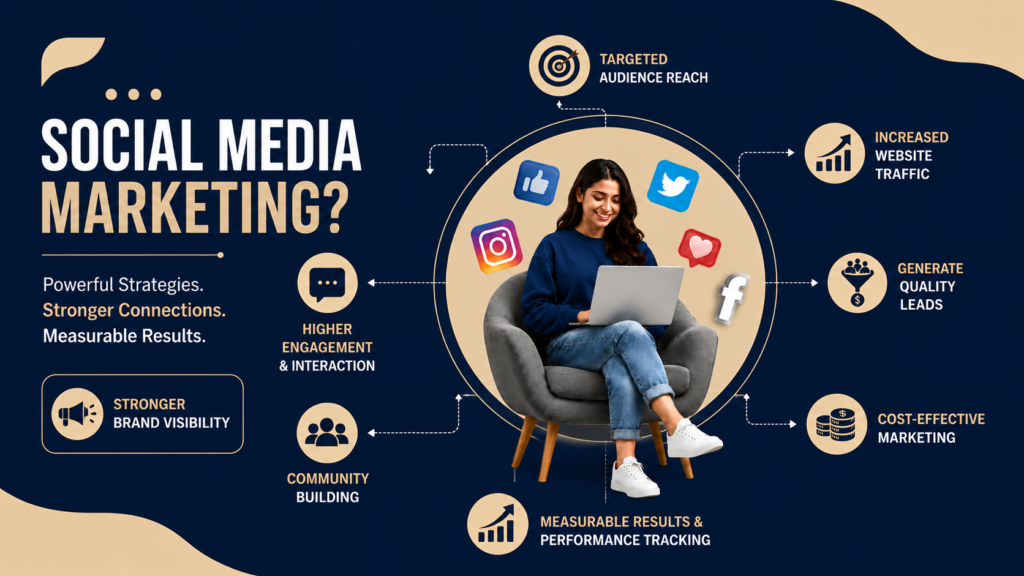
Social Media Marketing is a strategy that uses social platforms to increase brand awareness, connect with the right audience, share valuable content, and support business growth through ongoing customer engagement.
Rather than focusing only on selling products, social media marketing helps businesses educate, entertain, and inform their audience while encouraging interaction.
Businesses use social media marketing to achieve several important goals, including:
Increasing brand awareness
Generating qualified leads
Boosting online sales
Building customer trust
Improving customer engagement
Strengthening brand loyalty
Growing your online community
When implemented consistently, social media marketing becomes a valuable long-term investment for business growth.
Why Is Social Media Marketing Important?
Consumers spend several hours each day on social media platforms, making them one of the most effective channels for businesses to connect with potential customers. A strong social media presence allows brands to communicate directly with their audience, understand customer preferences, and promote products in a more engaging way.
Here are some reasons why social media marketing is important.
1. Increases Brand Awareness
Social media helps businesses introduce their products and services to a wider audience. Regular posting and engagement improve brand recognition and keep your business visible to potential customers.
2. Builds Customer Trust
Sharing useful information, responding to comments, and interacting with followers demonstrates transparency and helps establish your business as a trustworthy brand.
3. Generates Quality Leads
Well-planned social media campaigns attract people who are genuinely interested in your products or services, increasing the chances of converting them into customers.
4. Drives Website Traffic
Sharing blog posts, product pages, service pages, and promotional offers encourages users to visit your website and learn more about your business.
5. Supports Business Growth
As your audience grows and engagement increases, your opportunities to generate leads, improve customer retention, and increase sales also expand.
Benefits of Social Media Marketing
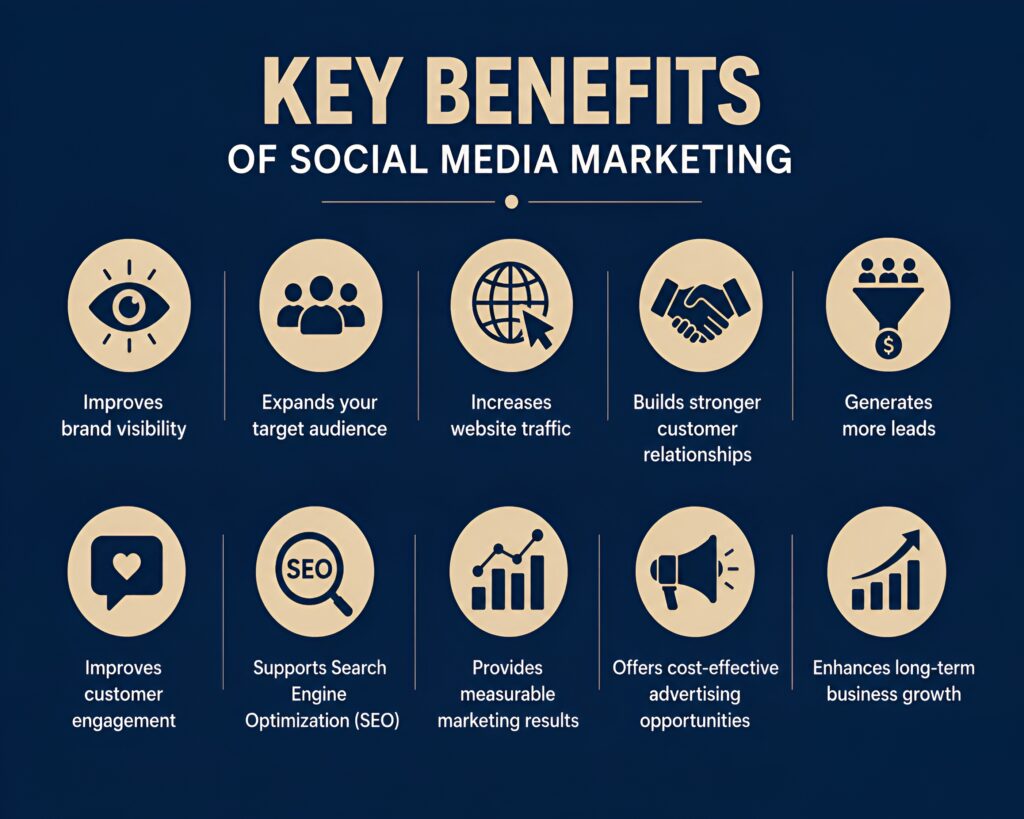
Businesses across various industries use social media marketing because it offers numerous advantages.
Some of the major benefits include:
Improves brand visibility
Expands your target audience
Increases website traffic
Builds stronger customer relationships
Generates more leads
Improves customer engagement
Supports search engine optimization (SEO)
Provides measurable marketing results
Offers cost-effective advertising opportunities
Enhances long-term business growth
With consistent effort and a clear strategy, social media marketing can become one of your most valuable marketing channels.
Popular Social Media Platforms
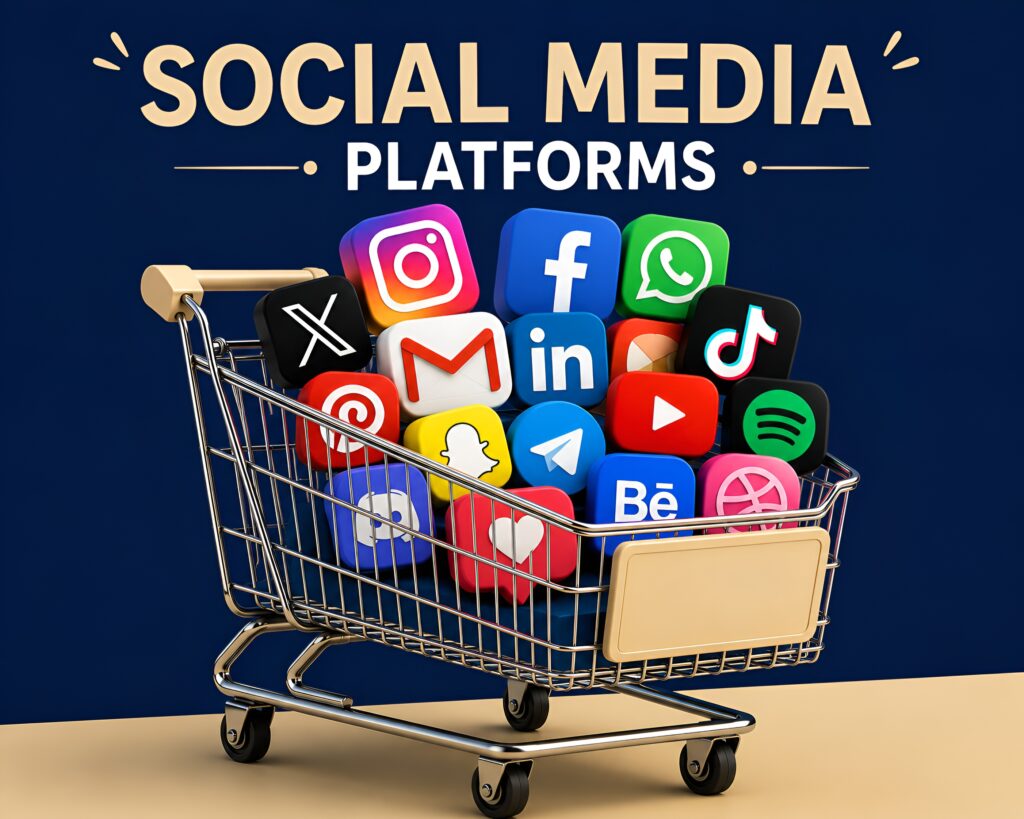
Selecting the right platform is essential because every social media network serves different audiences and business objectives.
Facebook remains one of the largest social networking platforms, making it suitable for businesses that want to reach a broad audience.
Facebook is ideal for:
Business pages
Community building
Paid advertising
Customer support
Sharing blog posts
Promoting event
Instagram focuses on visual content and is especially popular among fashion, beauty, food, travel, fitness, and lifestyle brands.
Popular Instagram content includes:
Photos
Reels
Stories
Carousel posts
Live videos
Product showcases
LinkedIn serves as a powerful platform for professional networking, allowing businesses to engage with industry experts, generate qualified leads, and strengthen their presence in the B2B marketplace.
Businesses commonly use LinkedIn for:
Professional networking
Lead generation
Recruitment
Industry insights
Company updates
Thought leadership
YouTube
Video content continues to dominate digital marketing, making YouTube an essential platform for businesses.
Effective YouTube content includes:
Product demonstrations
Tutorials
Customer testimonials
Educational videos
Brand stories
Behind-the-scenes content
Pinterest works as a visual search engine where users discover ideas and products.
It performs well for industries such as:
Home décor
Fashion
Food
DIY projects
Wedding planning
Interior design
X (Formerly Twitter)
X enables businesses to share quick updates, industry news, announcements, and engage in real-time conversations.
It is commonly used for:
News updates
Customer support
Industry discussions
Brand announcements
Event promotions
Creating a Successful Social Media Marketing Strategy
A successful strategy begins with clear planning rather than random posting. Every business should define its objectives before creating content.
Creating an effective social media marketing strategy becomes easier when you follow these essential steps:
Define Your Marketing Goals
Your goals may include:
Increasing followers
Driving website traffic
Generating leads
Improving customer engagement
Increasing online sales
Building brand awareness
Understand Your Target Audience
Learning about your audience helps you create content that matches their interests.
Important factors include:
Age
Location
Gender
Occupation
Interests
Online behaviour
Preferred social media platforms
Develop a Content Calendar
Planning content in advance helps maintain consistency.
Your calendar can include:
Educational posts
Promotional content
Customer testimonials
Industry news
Behind-the-scenes updates
Product launches
Seasonal campaigns
Interactive polls
Content Marketing for Social Media
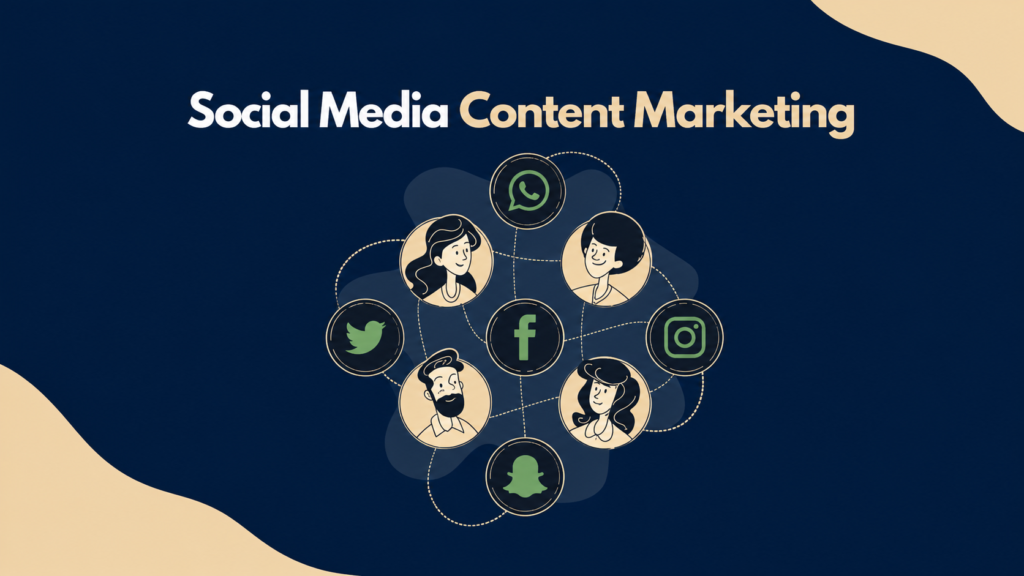
Valuable content is one of the most important factors in achieving long-term success through social media marketing.
Creating a variety of content keeps your audience interested and increases overall engagement.
Popular content formats include:
Short videos
Educational posts
Infographics
Blog article promotions
Customer success stories
Product demonstrations
Live streaming
Frequently asked questions
Industry tips
Interactive polls and quizzes
Instead of focusing only on promotional content, aim to educate, entertain, and solve problems for your audience. Valuable content is more likely to generate shares, comments, and long-term customer relationships.
Paid Social Media Advertising
Organic reach is valuable, but paid advertising enables businesses to reach larger and more targeted audiences quickly.
Most social media platforms offer advertising options based on demographics, interests, behaviours, and customer data.
Benefits of paid advertising include:
Immediate visibility
Precise audience targeting
Flexible budget management
Higher lead generation
Improved conversion opportunities
Detailed campaign performance reports
Popular advertising platforms include:
Facebook Ads
Instagram Ads
LinkedIn Ads
YouTube Ads
Pinterest Ads
X Ads
Combining organic content with paid advertising often delivers the strongest results for businesses seeking long-term growth.
Social Media Analytics and Performance Tracking
Creating and publishing content is only one part of a successful Social Media Marketing strategy. To achieve long-term growth, businesses must monitor performance and understand how their audience interacts with their content. Social media analytics provides valuable insights that help marketers identify successful campaigns and improve future marketing efforts.
Regularly analysing performance reports allows businesses to understand what is working, identify areas for improvement, and make informed marketing decisions based on real user data.
Some important social media metrics include:
Reach
Impressions
Engagement Rate
Likes and Reactions
Comments
Shares
Follower Growth
Website Clicks
Conversion Rate
Video Views
Tracking these metrics helps you understand what content performs best and where improvements are needed.
Essential Social Media Marketing Tools
Using the right tools can simplify content creation, scheduling, monitoring, and performance analysis.
Some popular social media marketing tools include:
Meta Business Suite – Allows businesses to manage their Facebook and Instagram accounts from one place, making it easier to schedule posts, respond to messages, and monitor performance.
Canva – For designing graphics and social media posts.
Buffer – For scheduling posts across multiple platforms.
Hootsuite – For managing several social media accounts.
Google Analytics 4 (GA4) – For measuring website traffic from social media.
Google Search Console – For monitoring website performance.
Microsoft Clarity – For analysing user behaviour on your website.
Selecting tools that match your business needs can improve productivity and help you maintain a consistent online presence.
Best Practices for Social Media Marketing
Successful social media marketing requires consistency, creativity, and a clear understanding of your audience. Rather than posting randomly, focus on delivering valuable content that encourages meaningful interactions.
Consider following these best practices:
Publish content consistently.
Use high-quality images and videos.
Respond to comments and messages promptly.
Create valuable and informative content.
Maintain a consistent brand identity.
Use relevant hashtags appropriately.
Include clear call-to-action (CTA) buttons.
Share customer testimonials and success stories.
Promote blog articles and website content.
Monitor campaign performance regularly.
Following these practices helps strengthen customer relationships and supports long-term business growth.
Building an Engaged Social Media Community
Growing your follower count is important, but building an active community creates lasting value for your business. Engaged followers are more likely to interact with your content, recommend your brand to others, and become loyal customers.
Here are several ways to encourage community engagement:
Ask questions in your posts.
Conduct polls and surveys.
Reply to comments thoughtfully.
Host live Q&A sessions.
Share user-generated content.
Celebrate customer achievements.
Run contests and giveaways responsibly.
Thank followers for their support.
Building genuine relationships with your audience increases trust and encourages repeat engagement.
Common Social Media Marketing Mistakes
Regardless of experience, businesses can face challenges in social media marketing if common errors are not identified and corrected in time.
Avoid these common mistakes:
Posting inconsistently
Ignoring audience engagement
Publishing low-quality content
Using too many hashtags
Not understanding your target audience
Over-promoting products without providing value
Ignoring analytics and performance reports
Failing to optimize content for each platform
Using poor-quality visuals
Neglecting customer feedback
Regularly reviewing your content strategy helps you identify opportunities for improvement and maintain strong audience engagement.
Social Media Marketing Trends for 2026
Social media continues to evolve as user preferences and platform features change. Staying informed about current trends can help businesses remain competitive and improve campaign performance.
Artificial Intelligence (AI)
AI-powered tools are helping businesses create content, automate repetitive tasks, generate captions, analyse customer behaviour, and personalize marketing campaigns. Businesses that use AI effectively can improve efficiency while maintaining high-quality content.
Short-Form Video Content
Short videos continue to attract high levels of engagement across multiple platforms. Creating informative, entertaining, and visually appealing videos can increase reach and encourage more interactions.
Popular formats include:
Instagram Reels
YouTube Shorts
TikTok Videos
Facebook Reels
Influencer Marketing
Partnering with influencers allows businesses to introduce their products or services to established audiences. Collaborating with creators whose values align with your brand can improve credibility and expand your reach.
Social Commerce
Many social media platforms now allow users to discover and purchase products without leaving the app. Optimizing your product catalog and creating engaging shopping content can help increase online sales.
Personalized Content
Customers expect content that reflects their interests and preferences. Businesses can improve engagement by tailoring posts, recommendations, and promotions to specific audience segments.
Authentic Brand Communication
People are more likely to engage with brands that communicate honestly and consistently. Sharing behind-the-scenes content, customer stories, and educational information helps build stronger relationships with your audience.
Frequently Asked Questions (FAQs)
What is Social Media Marketing?
Social Media Marketing is the process of promoting products, services, or brands through social media platforms to increase visibility, engage audiences, generate leads, and support business growth.
Which social media platform should businesses choose to achieve their marketing goals?
The ideal platform depends on your business goals and target audience. Facebook and Instagram are popular for B2C businesses, LinkedIn is effective for B2B marketing, while YouTube is well-suited for educational and video-based content.
How often should businesses post on social media?
Posting frequency depends on your audience and platform. Consistency is generally more important than posting multiple times each day. Creating a content calendar can help maintain a regular posting schedule.
Can Social Media Marketing improve SEO?
While social media activity is not a direct search ranking factor, it can increase brand awareness, drive website traffic, and encourage content sharing, all of which can support your broader digital marketing efforts.
How can I measure the success of my social media campaigns?
You can evaluate campaign performance by tracking metrics such as engagement, reach, impressions, follower growth, website traffic, conversions, and return on investment (ROI).
Conclusion
Today, social media marketing plays a significant role in helping businesses strengthen their online presence and connect with customers in the digital world. It enables businesses to connect with their audience, strengthen brand awareness, generate qualified leads, and build long-term customer relationships. By creating valuable content, engaging consistently with your audience, and analysing campaign performance, businesses can develop a strong online presence that supports sustainable growth.
Success on social media does not happen overnight. It requires a clear strategy, consistent effort, ongoing optimization, and a willingness to adapt to changing trends. Businesses that understand their audience, focus on quality content, and use data to guide their decisions are more likely to achieve meaningful results.
Whether you are a start up, a local business, or an established company, investing in social media marketing can help you expand your reach, improve customer engagement, and achieve your business objectives in an increasingly competitive digital landscape.
Call to Action
Ready to grow your business with Social Media Marketing?
Start by identifying your target audience, creating valuable content, choosing the right social media platforms, and monitoring your performance regularly. With a well-planned strategy and consistent execution, you can increase brand awareness, attract more customers, and build a successful online presence.
Author: FATHIMA RAHFA